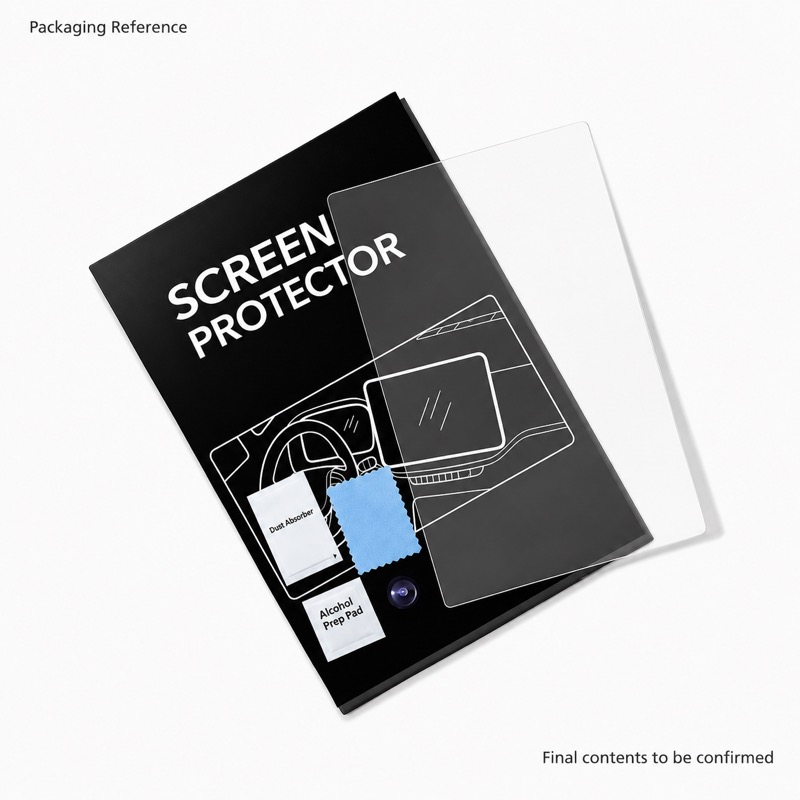
1. Define the sellable unit before designing the box
Define what the buyer will receive: one protector, a center-and-rear combination or another listed kit. Give each sellable configuration its own reference and piece count. A vehicle name or total order quantity does not define pack contents.
Keep the individual protector reference, retail-pack reference and shipping-carton reference separate. One kit may contain several components, while a carton contains several sellable units. Ask for the proposed pack and carton quantities rather than assuming a standard ratio. This distinction keeps quotation quantities and warehouse receiving counts comparable.
2. Separate material, finish and display position
Use a separate order line for each agreed outline, material, finish and display position. Clear and matte references can look similar inside a closed pack. Tempered glass and flexible protective film need distinct descriptions; a shared vehicle application does not make their materials, installation steps or handling interchangeable.
Record the target vehicle configuration and approved sample reference beside the packaging reference. Retain unresolved market or model-year questions as open items. Packaging approval confirms the reviewed packaging version; it does not independently approve vehicle fit or validate a catalog year label.
3. Approve artwork against the actual pack construction
Supply logo files, languages, proposed copy and packaging format. Confirm the printable area and how the product and installation contents sit inside the pack. Review the artwork proof and physical packaging sample together when required.
Assign a revision to the artwork and keep the approval date and reviewer. A changed vehicle description, finish label, instruction or insert can require a revised proof. Retain the previous version and the reason for the change so replacement stock is not packed using obsolete artwork.
4. Check labels and buyer-supplied barcode requirements
Ask your receiving or marketplace team which product reference, barcode and language fields they require. Provide the authorized barcode data and label files for the selected retail unit. Do not reuse another SKU's code because the vehicle or box size is similar, or assume a barcode can be assigned without the buyer's confirmation.
- Compare the printed reference with the actual protector and finish inside.
- Review barcode content, readability and label placement against the buyer's agreed receiving process.
- Confirm destination-market labeling requirements with the responsible buyer before artwork approval.
5. List installation contents and handling instructions
List every proposed accessory, insert and instruction version in the pack specification. Confirm which items are included and which require a separate quotation. Review the installation method for the selected construction and follow the vehicle manufacturer's screen-care instructions; a generic kit photograph is not an agreed contents list.
Review how the proposed packaging holds the protector and separates components in a kit. Where transport protection needs validation, agree the test method, conditions and acceptance criteria before making a performance claim. An attractive box or an intact sample alone does not establish shipment-damage performance.
6. Reconcile mixed cartons with the packing list
Build the proposed shipment from the approved order lines. Identify each retail-pack reference, its quantity and its carton allocation. If a carton contains more than one SKU, request an explicit contents breakdown. Reconcile sellable-unit counts separately from protector-piece counts so a two-piece kit is not mistaken for two retail units.
Agree carton identification and packing-list fields with the receiving team. Keep any substitutions or quantity changes visible for approval. Consolidation, per-SKU minimums, packing costs and shipment timing need confirmation in the quotation; a combined order does not automatically provide shared minimums or a common release date.
7. Release a traceable packaging record
Before release, link product sample approval, pack contents, artwork revision, label data and packing-list plan. Record outstanding items and their owners. For reorders, check product, receiving or artwork changes; previous approval does not cover every later variation.
If goods arrive damaged or mixed, retain the carton identification and packaging, record affected quantities and photograph the item and pack condition. Compare the evidence with the approved packing record before assigning a cause or proposing a remedy. Use the checklist below as a proposed buyer review record, with order-specific criteria agreed separately.
Keep a usable approval record
| Review item | Information to agree | Evidence to retain |
|---|---|---|
| Product and retail unit | Protector references, material, finish, position and pieces per retail unit | Order line linked to the approved product sample |
| Pack contents | Included accessories, instructions, inserts and packaging construction | Reviewed contents list and packaging sample reference |
| Artwork | Logo, copy, languages, version and authorized reviewer | Dated artwork proof and approval or revision notes |
| SKU label and barcode | Buyer-supplied data, placement and receiving requirements | Label proof checked against the actual contents |
| Carton allocation | Retail units per carton and contents of any mixed carton | Carton identification and SKU-level packing-list breakdown |
| Protection requirements | Handling concerns and any agreed packaging evaluation | Applicable method, conditions and results where available |
| Release and changes | Open items, approved versions and shipment conditions | Release record, change history and confirmed quotation |
Apply the checklist to real catalog references
E-Class clear and matte: keep finish labels separate →
Wide center-display HD clear SKU 06 and matte SKU 07 are separate references. Record the selected finish; confirm vehicle fit before sample approval.
Golf matte SKU 03: identify the exact reference →
The Golf catalog separates 12.9-inch clear SKU 01 from matte SKU 03. Record the SKU and finish; a catalog diagonal is not a verified protector dimension.
Continue your buying review
- How to Approve OEM Screen Protector Samples Before Bulk Production →
- Clear vs Matte: A Buyer’s Guide →
- OEM Automotive Screen Protector Manufacturing →
- Define Quality Before Production →
Explore all automotive screen-protector buying guides →
Send the references you want to approve
Share your vehicle list, selected SKU, quantities, available drawings and open packaging questions. MOQ, sample costs, production and shipment terms are confirmed in the quotation.
Request an OEM Sample & Wholesale Quote ↗